
Lorem ipsum dolor sit amet, consectetur adipiscing elit. Morbi eu nulla vehicula, sagittis tortor id, fermentum nunc. Donec gravida mi a condimentum rutrum. Praesent aliquet pellentesque nisi.

Short story

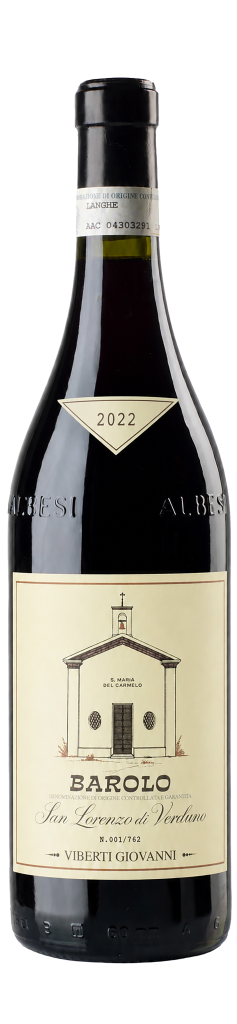
With San Lorenzo di Verduno, Viberti opens a new window onto the Verduno region, engaging with a vineyard that, while not his own, is deeply tied to the area’s identity.

Made from just 11 quintali of grapes, yielding a production of only 749 bottles, this Barolo was vinified using manual punching down and a minimalist approach, far removed from any notion of standardization. Every decision was guided by the goal of preserving the vineyard’s identity and the authentic character of the terroir.

This wine marks an interesting departure from Viberti’s usual style: less immediate, less accommodating, and more introspective. It does not seek opulence or aromatic seduction, but rather reveals itself slowly in the glass, allowing hints of blood orange, delicate spices, dark berries, and a deep savory quality to emerge.

The closed nose here is not a flaw, but part of the story: the result of a protective, low-oxidation environment that has safeguarded the wine, preserving its liveliness and depth. As the history of Barolo often teaches us, time does not correct wine—it reveals it.

Aged in neutral oak and bottled without fining, San Lorenzo di Verduno is a Barolo born of restraint and patience. It is a wine that does not reveal itself all at once, but evolves as you drink it: from an initial reserve to a radiant quality, from mineral notes to blood orange, culminating in an increasingly precise clarity.

SPECIFICATIONS

Type: red wine
Grape variety: 100% Nebbiolo
Appellation: Barolo DOCG
Production area: San Lorenzo di Verduno
Start date of the grape harvest: September 30, 2022

ANALYTICAL VALUES

→ Alcohol content: 15 % vol.
→ Total acidity: 5.77 g/l
→ First year of wine production: 2022

CLIMATIC TREND

The 2022 growing season was one of the most surprising we have ever experienced in the Langhe. It was a year marked by intense sunshine and very little rainfall, beginning with a dry winter that left the soils thirsty and without water reserves. While many feared the heat, our vineyards demonstrated an extraordinary ability to adapt. To protect the grape clusters, we maintained a dense canopy, creating a natural umbrella that prevented sunburn. The result was smaller berries, highly concentrated, with thick skins. This skin-to-juice ratio is a gift for Barolo, as it concentrates deep aromas and provides the solid structure we seek in a great vintage.

Organoleptic Characteristics

→ Color: Bright garnet red, not particularly deep in intensity.
Aromas: blood orange, berries, delicate spices, earth, and a deep, salty note.
Taste: Tense, vertical, and delicate, focused more on finesse than power. It begins compact and introverted, then gradually unfolds, revealing greater aromatic brightness and a refined, subtle texture.
Serving temperature: 16° C
Potential for growth: 10+ years

Vinification

Given the limited quantity of grapes, vinification was carried out traditionally and manually in small vats. The grapes were destemmed and crushed; no whole clusters
were used. Fermentation lasted approximately 14–15 days, with manual cap management using buckets and punch-downs, without mechanical pump-overs. At the end of fermentation, the free-run wine was separated from the pomace; the cleanest press wine was blended back into the main lot. Malolactic fermentation took place in tank, encouraged by the addition of fine lees from Bricco delle Viole, and was completed in approximately two weeks.

Refinement

After malolactic fermentation, the wine was allowed to settle before being transferred to a large cask of approximately 7 hectoliters made of well-used, neutral wood, providing no significant aromatic contribution. The wine aged for 24 months. Before bottling, it was transferred to stainless steel for final preparation. No fining was performed, as the wine was already naturally clear and stable.

The aging process lasted 24 months. Before bottling, the wine was transferred to stainless steel tanks for final preparation, without any clarification, as the wine was already naturally clear.